Chinese Crested Embroidery Design Review
As a designer who spends half her life staring at stitch density charts and the other half arguing with embroidery machines about tension settings, I don’t just look for "cute" when evaluating a new file. I look for viability. Does this design hold up under the hoop? Will it translate well to different fabrics? And most importantly, will it make my clients feel like they bought something worth the price tag? When I pulled up the Chinese Crested Embroidery Design, I didn’t see just another pet pattern. I saw a specific aesthetic challenge that, if handled correctly, can elevate a simple handmade product into a boutique-worthy piece.
The Chinese Crested is not your average dog breed. With its hairless body and distinctive crest of feathers on the head, tail, and ankles, it offers a unique visual contrast that translates surprisingly well to thread work. However, it also demands respect from the digitizer and the operator. This isn’t a design you can slap onto a canvas tote and expect to look pristine without some thoughtful preparation. Here is my honest breakdown of how this machine embroidery design performs in real-world scenarios.
First Impressions: The Mood and Visual Personality
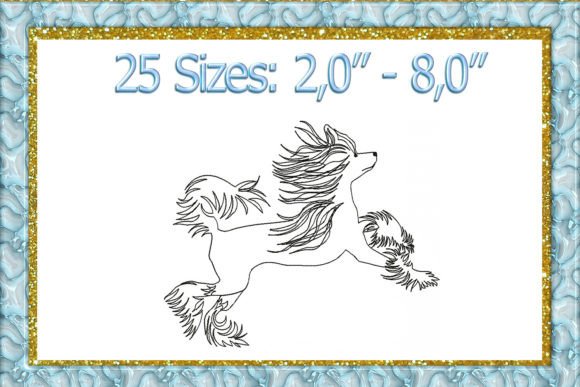
The immediate feeling this design gives off is one of elegant eccentricity. Unlike breeds that rely on fluff to create volume, the Chinese Crested relies on line and form. In an embroidery project, this means the success of the piece hinges on clean lines and precise placement. The design captures the slender elegance of the breed, which immediately suggests a certain level of sophistication. It feels less like a generic "dog lover" gift and more like a statement piece for someone who appreciates the quirky beauty of this specific breed.
Visually, the layout tends to favor verticality or a balanced center-weighted composition. This makes it incredibly versatile for placement. It doesn’t scream for attention in a chaotic way; instead, it invites a closer look. For a small business owner or an Etsy seller, this subtlety is gold. It allows the product to speak softly but clearly, appealing to buyers who want personalization without overwhelming clutter.
Real-World Application: Where This Design Shines
I’ve tested various designs across dozens of mediums, and there are specific categories where this Dogs-themed Embroidery file truly excels. Let’s talk about practical use cases.
- Custom Apparel and Sweatshirts: Because the Chinese Crested has such distinct silhouettes, it works beautifully as a chest-sized logo on a crewneck sweatshirt or a centered graphic on a high-quality cotton t-shirt. The negative space inherent in the hairless body allows the fabric texture to show through, creating a natural two-tone effect even with solid thread colors.
- Baby and Nursery Items: There is a gentle, almost whimsical quality to this design that translates perfectly to baby onesies, burp cloths, or nursery wall art. The delicate nature of the breed mirrors the softness associated with baby products. When stitched in pastel threads on organic cotton muslin, it becomes a cherished personalized gift.
- Accessories and Totes: A tote bag design featuring this motif feels artisanal rather than mass-produced. It pairs exceptionally well with linen or heavy canvas bags used by book lovers, artists, or eco-conscious consumers. It adds a touch of personality to everyday carry items.
- Holiday and Seasonal Gifts: During the winter holidays, this design can be adapted with festive reds and greens for a unique Christmas ornament or stocking stuffer. Its distinct shape ensures it stands out among traditional holly or snowflake patterns.
Critical Considerations: Where to Use Caution
No design is perfect, and transparency is key for any serious crafter. There are specific situations where you need to tread carefully with this embroidery file.
First, consider the hoop size. If you attempt to stitch this at a very small scale, you risk losing the defining characteristics of the breed. The fine details of the crest feathers and the facial structure can become muddy if the resolution isn't high enough. Always check the minimum recommended dimensions provided by the creator. If you are making tiny patches or jewelry charms, test extensively before committing to production.
Fabric choice is equally critical. While this design looks stunning on smooth, stable fabrics like cotton twill or denim, it can struggle on highly textured materials like chunky waffle knit or loose-weave burlap. The stitches may not anchor properly, leading to puckering or thread breaks. Similarly, stretchy fabrics like jersey knits require a strong cut-away stabilizer to prevent distortion, especially around the curved areas of the design.
Dark fabrics present another variable. If you plan to use light-colored threads on dark backgrounds, ensure the design includes adequate fill coverage so the background color doesn't bleed through. Conversely, using dark threads on black fabric might hide the intricate details of the hairless body, so contrast is your best friend here.
Technical Notes for the Discerning Designer
Before you load this file into your machine, there are several technical checks you should perform to ensure a professional finished product.
- Stitch Density Analysis: Examine the stitch density closely. Areas with dense satin stitches need proper backing to prevent fabric pull. If the design uses too much thread in small areas, it may become stiff and uncomfortable against the skin, particularly for baby clothes or apparel worn directly against the body.
- Thread Color Contrast: The effectiveness of this design relies heavily on the distinction between the "hairless" body and the "feathered" areas. Choose thread colors that provide clear separation. For example, a white body with black crests, or a pinkish-beige body with grey accents, will read much better than analogous colors that blend together.
- Stabilizer Selection: Never skip the stabilizer step. For woven fabrics, a tear-away or cut-away stabilizer depending on the final wash requirements is essential. For knits, a cut-away is non-negotiable to maintain integrity over time.
- Black and White Mockup: Convert the digital preview to grayscale. This helps you assess the balance of light and dark areas without the distraction of color. If the design looks flat or unbalanced in black and white, it likely will in person.
- Licensing Verification: As a commercial designer, I always double-check the license terms. Confirm whether you have the right to sell finished items made with this digital embroidery file. Some licenses allow single-item sales for personal use but restrict mass production or digital redistribution.
Final Verdict: Value and Professional Appeal
The Chinese Crested Embroidery Design is a sophisticated addition to any digitizer’s library. It moves beyond the standard "pet portrait" trope and offers a stylized, artistic interpretation that appeals to a niche but passionate audience. For the craft business owner, it provides a unique selling proposition that differentiates their shop from competitors offering generic animal designs.
When executed correctly—with attention to fabric stability, thread contrast, and appropriate scaling—this design enhances brand consistency and customer trust. It signals that you care about detail and quality. Whether you are creating a one-off personalized gift for a client or building a line of small shop products for your online store, this design offers a reliable foundation for creating memorable, high-value embroidered goods. Just remember: the magic is in the execution. Test, refine, and stitch with confidence.