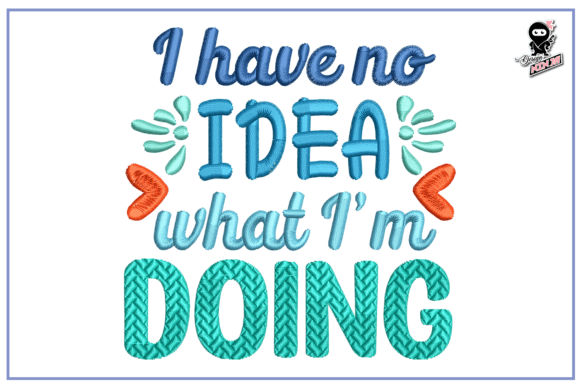
Funny Quote Embroidery Design Review
As an experienced embroidery designer who has spent years turning digital files into tangible brand assets, I approach every new design with a critical eye. We aren’t just looking for something that looks cute on a screen; we are evaluating whether a machine embroidery design can survive the rigors of production, maintain its integrity at small sizes, and ultimately enhance the brand identity of the end user. Today, I am reviewing the Funny Quote Embroidery Design, specifically the "I have no idea what I’m doing" concept. This piece falls under the House category and is categorized as Embroidery, but its true value lies in its application for small business merch, branded patches, and custom apparel.
First Impressions: Personality Meets Professionalism
The immediate visual appeal of this design is rooted in relatability. In the world of handmade products and boutique branding, humor is a powerful connector. The phrase "I have no idea what I’m doing" strikes a balance between playful vulnerability and professional self-awareness. It feels friendly, modern, and slightly rustic in its charm, making it ideal for creative studios, bakeries, florists, and local cafes.
From a design perspective, the typography needs to be bold enough to read quickly but clean enough to look intentional. When I first analyzed this embroidery file, my primary concern was legibility. Does the font choice support the message? Yes. The design avoids overly decorative flourishes that might get lost in stitching, opting instead for a clear, readable aesthetic that works well for custom apparel. It signals to the customer that the brand is human, approachable, and not taking itself too seriously—a key trait for successful Etsy sellers and craft business owners.
Real-World Business Applications
The versatility of this design makes it a strong candidate for various merchandise categories. Here is how I see it performing in real business scenarios:
- Embroidered Patches: This design translates exceptionally well to iron-on or sew-on patches. For a small café or bakery, these patches can serve as staff badges or customer collectibles. The humorous quote adds personality to uniform elements without compromising professionalism.
- Tote Bag Design: Canvas totes are a staple for handmade brands. Placing this design on the front pocket or center chest of a tote bag creates an instant conversation starter. It elevates a basic product into a branded statement piece.
- Apron Embroidery: For artisans, chefs, or crafters, aprons are both functional and promotional. A subtle placement of this quote on the bib or pocket area adds a touch of whimsy to workwear, reinforcing a culture of creativity and honesty.
- Cap Embroidery: Structured caps offer a great surface for smaller designs. If the lettering is concise, this design can work as a chest logo accent, providing a memorable detail for team uniforms or event merch.
- Product Packaging Accents: Beyond apparel, consider using this design on hang tags or fabric labels attached to your products. It reinforces the brand voice before the customer even uses the item.
When used in commercial embroidery projects, this design helps build customer trust by showing that the brand has a distinct personality. It moves beyond generic corporate aesthetics and offers a handmade product feel that resonates with buyers looking for authenticity.
Strategic Placement and Brand Identity
Where you place this design matters as much as the design itself. For brand identity consistency, ensure that the thread colors match your existing palette. A muted, earthy tone might suggest a rustic, organic brand, while bright, contrasting threads could signal a youthful, energetic startup. The goal is visual consistency across all design assets.
This design also impacts buyer engagement. Customers are more likely to share photos of merchandise that evokes an emotional response—whether that is laughter or recognition. By choosing a quote that many professionals relate to, you create a sense of community around your brand. This is particularly effective for small business merch targeting remote workers, creatives, or entrepreneurs.
Technical Considerations and Potential Pitfalls
While the concept is strong, execution is everything. As a designer, I must highlight areas where this design requires careful handling to avoid quality issues.
- Small Patch Sizes: If digitizing this for small patches (under 2 inches), pay close attention to stitch density. Fine details may blur together. Ensure the spacing between letters is adequate to prevent tangling.
- Curved Surfaces: Applying this to cap fronts or curved sleeves requires precise hooping. Distortion can make the text unreadable. Always test on the actual garment type.
- Thread Color Contrast: On dark uniforms or textured fabrics like heavy canvas, low-contrast threads will disappear. Use high-visibility thread colors to ensure the message pops.
- High Stitch Density: Avoid placing dense stitches on delicate fabrics or items that need frequent washing, as excessive stitching can cause puckering or fabric distortion over time.
- Detailed Outlines: If the design includes fine outlines, inspect them closely. Thin lines often break during production. Simplifying the outline can improve durability.
For items that require frequent washing, such as aprons or work shirts, proper finishing is crucial. Reinforce edges and consider the long-term wearability of the design. A poorly executed digital embroidery file can damage a brand’s reputation faster than a mediocre design can help it.
Practical Designer Notes for Production
Before committing to bulk production or listing this design in your shop, follow these essential steps to ensure a polished finished product:
- Test in Black and White: Convert the design to monochrome to check contrast and spacing. This reveals layout issues that color might hide.
- Check Small Scale Legibility: Zoom out or print the design at 1:1 scale. Can you read "I have no idea what I’m doing" clearly? If not, simplify the typography.
- Review Thread Color Contrast: Simulate different thread combinations against your target fabric colors. Ensure readability on both light and dark backgrounds.
- Inspect Spacing: Verify that kerning and line spacing allow for smooth machine movement. Tight spacing increases the risk of thread breaks.
- Confirm Hoop Size: Ensure the design fits within standard hoop dimensions for your equipment. Large designs may require multi-hooping, which adds complexity.
- Test on Real Fabric: Never skip this step. Fabric texture affects how stitches sit. Test on the exact material you plan to use, including any pre-washing effects.
- Use Proper Stabilizer: Choose a stabilizer that matches the fabric weight. Lightweight fabrics need tear-away, while knits may require cut-away to prevent shifting.
- Create a Printable Mockup: Before producing physical samples, create a high-quality printable mockup for client approval. This saves time and materials.
- Compare Beside Other Assets: Place this design next of your other design assets to ensure it aligns with your overall brand aesthetic.
- Confirm Commercial Licensing: Most importantly, verify that you have the right to sell products made with this embroidery file. Check the license terms provided by the creator to avoid legal issues.
Final Verdict
The Funny Quote Embroidery Design is a valuable addition to any designer’s toolkit for small business merch and branded goods. Its strength lies in its relatability and versatility across various applications, from apron embroidery to tote bag design. However, success depends on technical precision. By paying attention to stitch density, thread contrast, and proper stabilization, you can transform this simple quote into a powerful branding tool.
For Etsy sellers, crafters, and product designers, this design offers a way to inject personality into everyday items. It connects with customers on an emotional level, fostering loyalty and engagement. Just remember to test thoroughly, respect licensing agreements, and always prioritize quality in your commercial embroidery projects. When done correctly, this design won’t just decorate a product—it will define a brand experience.