Mini Nurse Cap Machine Embroidery Review
As an embroidery designer who spends weekends hunched over my hoop at craft fairs and handmade markets, I have learned that the difference between a "look" and a "buy" often comes down to scale, clarity, and emotional connection. When I first pulled up the Mini Nurse Cap Machine Embroidery design for review, my immediate thought was not about its technical complexity, but about where it would sit on a crowded table. This is not a grand, statement piece; it is a delicate, charming accent. In the world of handmade products, charm sells, but only if the detail survives the jump from digital screen to finished fabric.
This review evaluates how this specific embroidery file performs as a craft fair product. We will look at its visual appeal, its practical application on various goods, and the critical production notes every Etsy seller or boutique maker needs to consider before committing to batch production.
First Impressions: Cute, Compact, and Commercially Viable
The title itself gives away the design’s personality: Mini Nurse Cap Machine Embroidery. It is inherently cute, nostalgic, and professional without being overly clinical. From a design perspective, this falls into the category of decorative accents rather than focal points. It feels modern yet slightly rustic, making it versatile enough for farmhouse-style decor or modern medical-themed gifts.
For a booth display, small details are risky. If a customer has to squint to see the design, they likely won’t stop. However, the mini nurse cap is designed to be read quickly. It evokes care, health, and nostalgia. For digital sellers offering this as a digital embroidery file, the appeal lies in its repeatability. It is small enough to stitch multiple times on a single item, creating patterns that feel premium and thoughtful.
Product Applications: Where Does It Shine?
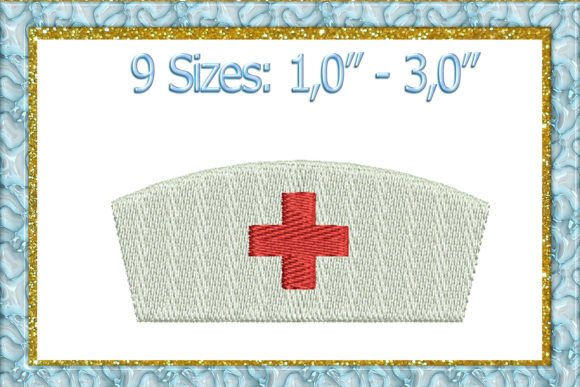
Not all machine embroidery designs work on all fabrics. Based on the dimensions provided (starting around 3.00” x 1.27”), this design is best suited for items where space is limited but impact is desired. Here is how I envision this work category design performing on specific handmade products:
- Tote Bags: A tote bag design featuring a row of three mini nurse caps along the bottom hem or clustered near the handle base creates a subtle, professional vibe. It works exceptionally well for nurses, midwives, or healthcare students looking for personalized everyday carry items.
- Kitchen Towels and Aprons: While the theme is medical, the aesthetic can cross over into kitchen decor if styled correctly. On a white tea towel, a single mini cap with a small heart or stethoscope accent adds a touch of whimsy. For apron embroidery, placing it on the chest pocket offers a clean, unobtrusive branding spot for small business owners in the wellness industry.
- Embrroidered Patches: This is perhaps the strongest use case. The compact size makes it ideal for iron-on or sew-on patches. These are high-margin small shop products because they require less thread and less hoop time. They are perfect for embellishing denim jackets, backpacks, or plain baseball caps.
- Fabric Pouches and Zipper Bags: Small zippered pouches for makeup or sewing kits benefit from this scale. A cluster of three or five caps arranged in a scattered pattern looks artistic and busy, giving the impression of a complex design while actually being quite fast to stitch.
- Pillow Covers: On a lumbar pillow or a standard throw pillow, this design can serve as a corner accent. It adds a pop of color and theme without overwhelming the textile.
Photography and Online Presentation
For any Etsy seller or online merchant, the printable mockup is just as important as the physical product. Because the Mini Nurse Cap Machine Embroidery is small, it can easily get lost in wide-angle photos. When creating your design assets, ensure you include close-up shots that highlight the stitch definition. Show the texture of the thread against the fabric. Customers need to see that the "nurse" aspect is clear—that the cap shape is recognizable even at 3 inches wide.
If you are selling the physical item, stage it with other healthcare-related props or soft, neutral backgrounds. The contrast between the bright white of the cap and the colored thread (often blue, red, or green) should be sharp. This visual clarity increases perceived value and helps justify a higher price point for your finished product.
Production Realities: What Every Designer Must Check
Before you print those tags or list the item on your website, you must address the technical realities of stitching this specific design. The description mentions it comes with 9 sizes, which is excellent for versatility, but it also raises questions about stitch density and stability.
Stitch Density and Clarity
The most common failure point for mini designs is losing detail. At smaller sizes, such as the 2.75” x 1.17” option, the stitches may become too dense, causing the fabric to pucker or the thread to break. You must inspect the stitch density closely. If the satin stitches are too thick, the curve of the cap may look blobby rather than crisp. Test the smallest size on scrap fabric to ensure the outline remains distinct.
Hoop Size and Stability
Confirm the recommended hoop size for each variation. Smaller hoops are faster to set up, but they offer less room for error. Ensure your machine’s hooping mechanism can handle the tight tolerance required for sub-3-inch designs. Using the wrong stabilizer—such as a light tear-away instead of a cut-away for stretchy fabrics—will cause the design to shift, ruining the symmetry of the cap.
Fabric Texture and Thread Contrast
Avoid highly textured fabrics like heavy burlap or looped towels for this design. The fine details of the nurse cap will disappear into the weave. Stick to smooth cottons, poly-cotton blends, or canvas for the best results. Additionally, choose thread colors that provide high contrast. A white cap on a white shirt will vanish; a navy cap on a black shirt might lack definition. White thread on dark fabric, or pastel threads on light fabric, usually yields the clearest image.
Commercial Licensing
As a professional, never assume you can sell unlimited quantities. Check the license terms included with the embroidery file. Some designers allow commercial use up to a certain number of units, while others restrict sales to personal use only. Clarifying this protects your brand consistency and legal standing.
Final Verdict: A Strong Accent Piece
The Mini Nurse Cap Machine Embroidery is not a standalone masterpiece, but it is a highly effective tool for adding character to commercial embroidery projects. Its strength lies in its ability to transform generic blanks into personalized, meaningful gifts. Whether attached to a tote bag for a nursing graduate or stitched onto a patch for a healthcare worker’s uniform, it delivers a quick emotional punch.
For craft fair sellers, the key to success with this design is presentation. Group it with complementary items, use good lighting to show the stitch quality, and ensure your pricing reflects the labor involved in setting up and stitching these small, detailed pieces. If you test thoroughly, manage your expectations regarding size limitations, and style it well, this design can become a steady seller in your lineup of handmade products.