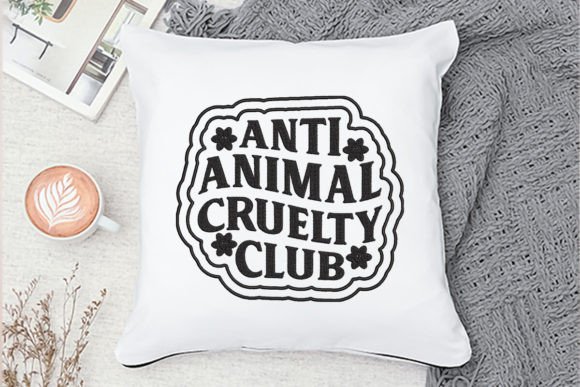
Anti Animal Cruelty Club Embroidery Review
As an embroidery designer who has spent years turning digital concepts into tangible brand assets, I look at every new design file with a critical eye. It is not just about whether the stitches are clean; it is about whether the design can hold up under the demands of commercial production. Today, I am reviewing the Anti Animal Cruelty Club Embroidery design. This piece falls squarely into the Animal Quotes category, but for small business owners, its true value lies in its potential as a powerful statement piece for branded merchandise.
This review focuses on how this machine embroidery design performs when moved from the screen to the hoop, specifically for use in small business merch, custom apparel, and branded product lines. Whether you are running an Etsy shop, a local boutique, or a creative studio, understanding the practical application of this design is key to maximizing its impact.
First Impressions: Visual Personality and Brand Alignment
The title Anti Animal Cruelty Club Embroidery immediately signals a strong moral stance. In the world of branding, values drive engagement. This design does not whisper; it speaks with purpose. The visual personality appears bold and clear, leaning towards a modern yet classic aesthetic that fits well within the handmade product space. It feels professional enough for a uniform but carries the warmth required for community-focused brands.
For businesses that prioritize ethics—such as pet brands, florists, bakeries, or eco-conscious boutiques—this design serves as more than decoration. It acts as a filter for your ideal customer. When a buyer sees this embroidered patch on a tote bag or apron, they instantly understand the brand’s ethos. This clarity enhances brand identity and builds trust, as customers are increasingly drawn to companies that align with their personal values.
Real-World Business Applications
A great embroidery file must be versatile. Based on the description that this design can be sewn on clothes, t-shirts, home decor, pillows, and gifts, here is how it translates to real-world commercial use cases.
- Staff Uniforms and Aprons: For a café or bakery with an animal-friendly mission, placing this design on the chest of an apron creates a cohesive team look. It transforms standard workwear into a marketing tool. The design works well as a subtle accent that invites conversation between staff and customers.
- Caps and Headwear: Cap embroidery requires precision. If the design scales well, it makes for an excellent front-panel logo on trucker hats or structured caps. This is a staple item for craft fairs and local events, offering high visibility for your commercial embroidery services.
- Tote Bag Design: Tote bags are perhaps the most effective walking billboards. Sewing this design onto canvas totes allows for a larger surface area, showcasing the details of the stitch work. It appeals to shoppers who want to carry their values with them.
- Product Packaging Accents: Don’t overlook the unboxing experience. A small embroidered label or patch attached to gift tags or packaging adds a premium touch. It elevates the perceived value of your finished product, making it feel curated and thoughtful.
- Boutique Merchandise: For standalone sellers, this design can anchor a collection. Think sweatshirts, hoodies, or even home decor items like throw pillows. The versatility mentioned in the product description suggests it can adapt to various fabric textures, provided the correct stabilizer is used.
Strategic Placement and Design Considerations
While the design has strong potential, an experienced designer knows that placement is everything. Not every spot on a garment is suitable for every design element. Here is where you need to exercise caution to ensure a high-quality result.
When creating an embroidered patch, size matters. If the design includes intricate text or fine outlines, it may lose definition if reduced too much. Always test the design at the exact size you intend to produce. Tiny lettering can become illegible, and detailed outlines might merge together, especially on textured fabrics.
Curved surfaces, such as the front of a cap or the shoulder of a shirt, require careful hooping. Ensure your digitizing software accounts for the curvature so the design does not pucker or distort. Additionally, consider the stitch density. High-density areas can make fabric stiff, which might be uncomfortable for wearable items like t-shirts but perfect for structured items like hats or bags.
Thread color contrast is another critical factor. On dark uniforms, light thread colors will pop, but on light fabrics, you may need a contrasting background or a different thread palette. Always inspect the spacing between elements to ensure the design breathes well. Crowded designs can look cluttered and cheap, while balanced spacing screams professionalism.
Impact on Brand Identity and Customer Trust
In the digital age, authenticity is currency. Using a design like Anti Animal Cruelty Club Embroidery on your products sends a clear message about who you are. It fosters a sense of community among your buyers. When customers see that you care about animal welfare, they are more likely to engage with your brand and recommend it to others.
This emotional connection drives repeat business. A well-executed digital embroidery file contributes to a consistent visual language across all your design assets. Whether it appears on a website mockup, a social media post, or the physical product, consistency reinforces recognition. It tells the customer that you pay attention to detail, which extends to how you treat your products and your customers.
Practical Designer Notes for Production
Before you commit to a full production run, follow these essential steps to avoid costly mistakes.
- Test in Black and White: Convert the design to grayscale first. This helps you evaluate the balance and contrast without being distracted by thread colors.
- Check Small Patch Size: Zoom in to 10% scale. Can you still read the text? Are the details distinguishable? If not, simplify the design or increase the minimum size.
- Review Thread Color Contrast: Simulate different thread combinations. Ensure the foreground stands out against the intended fabric color.
- Inspect Spacing and Density: Look for areas where stitches might overlap excessively or leave gaps. Adjust if necessary to prevent puckering.
- Confirm Hoop Size: Verify that the design fits within your machine’s standard hoops. If it is large, you may need multiple hooping sessions, which increases production time.
- Test on Real Fabric: Digital previews do not always match reality. Stitch the design on the actual fabric you plan to use. Check for stability, stretch, and finish quality.
- Use Proper Stabilizer: The right stabilizer is crucial for preventing distortion. Tear-away, cut-away, or water-soluble stabilizers each have their place; choose based on the fabric type.
- Create a Printable Mockup: Before producing inventory, create a high-quality printable mockup for client approval or marketing purposes. This allows you to visualize the final product in context.
- Compare Against Other Assets: See how this design looks alongside your existing logos and graphics. Does it fit the overall aesthetic?
- Confirm Commercial Licensing: This is non-negotiable. Ensure you have the legal right to sell products made with this embroidery design. Check the license terms carefully before adding it to your catalog.
Final Verdict
The Anti Animal Cruelty Club Embroidery design offers a compelling option for businesses looking to add meaningful, value-driven content to their product lines. Its versatility across various items—from custom apparel to home decor—makes it a valuable addition to any designer’s toolkit. By paying close attention to technical details like stitch density, fabric choice, and licensing, you can transform this digital file into a profitable and impactful part of your brand story.
Remember, the best embroidery designs are those that tell a story. This design tells one of compassion and advocacy. For small business owners, that story can be the difference between a simple purchase and a loyal customer relationship. Evaluate it carefully, test it thoroughly, and watch it elevate your finished product line.