Baby with Hat Embroidery Design Review
As an embroidery designer who spends weekends setting up booths at craft fairs and managing an online handmade shop, I know that the difference between a design that sits on your hard drive and one that sells out in minutes often comes down to practicality and visual appeal. When evaluating Baby with Hat Embroidery Design, I look beyond just how cute it is on screen. I ask: Does this work as a craft fair product? Is it easy for customers to recognize from three feet away? And most importantly, can I produce it efficiently without ruining my fabric or my mood?
This review breaks down why Baby with Hat Embroidery Design is a strong contender for your next batch of handmade products, specifically tailored for the boys’ category while remaining versatile enough for broader gifting markets.
First Impressions and Visual Appeal
The title suggests a classic, timeless motif. In the world of machine embroidery, "baby" themes are evergreen, but they need to stand out among hundreds of other listings. Baby with Hat Embroidery Design offers a focal point that is inherently charming. The inclusion of a hat adds a layer of character—it’s not just a generic baby face; it implies a story, a season, or a specific style like rustic, modern, or vintage.
From a booth display perspective, this design has high "stop power." When hung on a rack or laid flat on a table, the silhouette of a hat creates a recognizable shape that draws the eye. It feels soft yet structured, which translates well into physical goods. Whether you are aiming for a farmhouse aesthetic or a clean, modern boutique look, this design provides a solid foundation. It avoids being overly cluttered, which is crucial because busy designs often lose their charm when embroidered on textured fabrics.
Product Versatility: Where This Design Shines
One of the biggest mistakes new sellers make is limiting their embroidery file to one type of product. Baby with Hat Embroidery Design is highly adaptable. Here is how it performs across key categories:
- Tote Bags and Market Bags: A tote bag design featuring this motif works beautifully as a chest pocket accent or a large central print. For a handmade product targeting parents, a canvas tote with this embroidery feels premium and giftable.
- Aprons and Tea Towels: Kitchen items are impulse buys at craft fairs. Apron embroidery benefits from a design that isn’t too wide, allowing it to sit comfortably above the bib area. Similarly, tea towel embroidery allows the design to breathe, highlighting the stitch quality against white or neutral linen.
- Caps and Beanies: If the design scales well, it can be placed on the front panel of a baseball cap or the cuff of a beanie. However, curved surfaces require careful hooping, so test this application first.
- Patches and Pouches: This design translates perfectly into an embroidered patch for backpacks or denim jackets. It also works as a focal point on small fabric pouches used for diapers or makeup, appealing to the Etsy seller demographic looking for niche gift sets.
- Pillow Covers: As a decorative home item, this design adds a touch of warmth to a nursery or child’s room. It serves as a great small shop product that commands a higher price point due to its perceived value as home decor.
Production Practicality and Efficiency
For any commercial embroidery business, time is money. Baby with Hat Embroidery Design appears to have a balance of detail and simplicity that aids production. Designs that are too dense slow down the machine and increase thread breakage risk. Designs that are too sparse can look unfinished on certain fabrics.
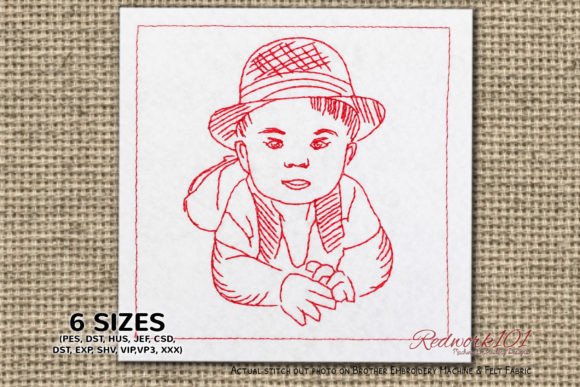
The description notes that the Box Stitch shown in the picture is optional. This is a significant advantage for bulk production. You can choose to run the design with the box for added texture and dimension, or omit it for a faster, cleaner finish depending on the customer’s preference or the garment type. This flexibility allows you to offer tiered pricing or customize orders without needing multiple separate files.
Photography is another critical factor. Because the design features a distinct object (the hat), it photographs well for printable mockups and Etsy listings. It doesn’t rely on subtle gradients or tiny text that might blur in a thumbnail image. This clarity helps convert browsers into buyers.
Important Considerations for Quality Control
Even the best design assets can fail if the execution is poor. Here are some careful-use notes to keep in mind when digitizing and stitching Baby with Hat Embroidery Design:
- Stitch Density: Check the stitch density closely. If the hat brim or facial features have dense satin stitches, ensure your hoop stabilizer is strong enough to prevent puckering, especially on lightweight knits or thin cottons.
- Fabric Texture: Avoid placing this design on heavily textured fabrics like thick terry cloth or boucle unless you have tested it. The fine details of the hat may get lost in the weave. Smooth cotton, linen, or canvas will show off the thread colors best.
- Color Contrast: The outer box color mentioned in the description may vary. Ensure there is sufficient contrast between the thread and the base fabric. On dark fabrics, use a cut-away stabilizer and possibly a top stabilizer to maintain clarity.
- Hoop Size: Confirm the recommended hoop size before starting. If the design is intended to be small, ensure your machine’s minimum hoop size accommodates it without cutting off important elements.
- Small Details: Inspect any tiny details, such as eyes or buttons. If these are too small, they may become indistinguishable blobs after washing. If clarity is a concern, consider simplifying the digitization slightly for mass production.
Final Verdict for Craft Fair Sellers
Baby with Hat Embroidery Design is a smart addition to any digital embroidery file library aimed at the boys’ market or general baby gifts. It strikes a balance between cute and stylish, making it appealing to a wide range of buyers. Its versatility across finished product types—from apron embroidery to tea towel embroidery—means you can maximize your return on investment by selling it on multiple platforms.
Before adding it to your main production line, remember to create at least one real mockup. Test it on the exact fabrics you plan to sell. Check the spacing, confirm commercial licensing terms, and ensure the stabilizer choice matches your fabric weight. By doing your due diligence, you’ll turn this design into a reliable bestseller that enhances your brand consistency and boosts buyer engagement at your next craft fair or online store.