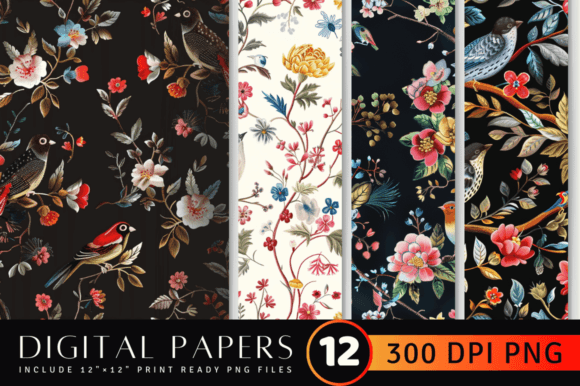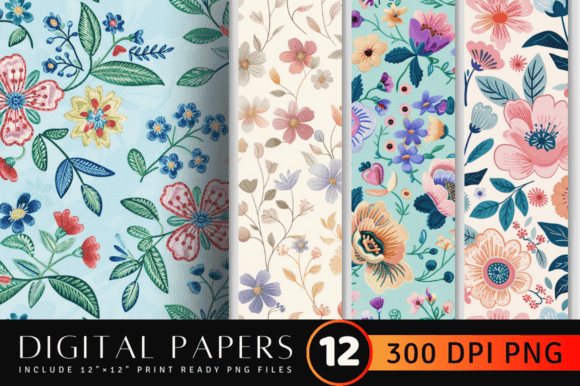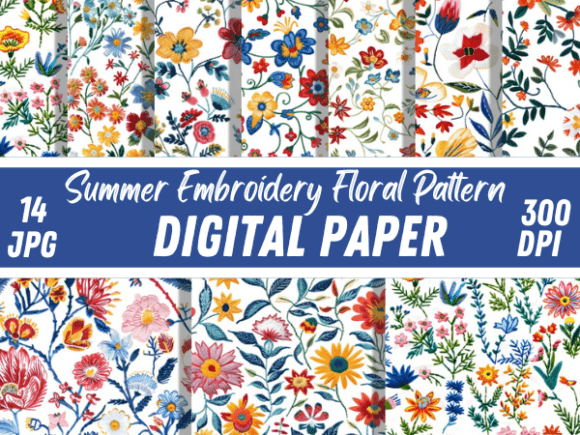
Embroidery Flower Digital Papers
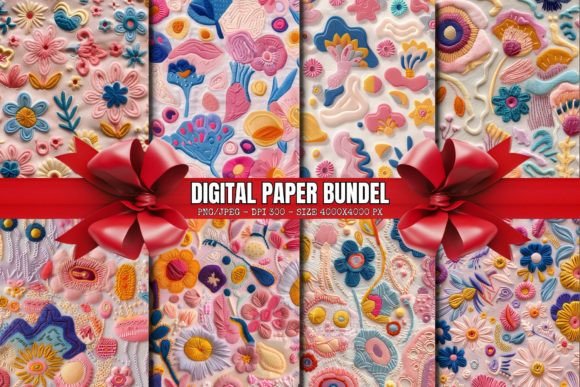
As an embroidery designer who spends half my life in the hoop and the other half prepping for weekend craft fairs, I have developed a very specific set of criteria for any new design assets I bring into my studio. When I first laid eyes on this collection titled Embroidery Flower Digital Papers, my immediate reaction was one of cautious optimism. The title suggests a pattern-based approach rather than a single centered motif, which immediately signals potential for unique applications beyond standard monogramming. With eight distinct JPG files at a generous 4000 x 4000 pixel resolution, these Patterns and Graphics offer high-resolution detail that is crucial for both digital use and physical production.
My primary goal when reviewing any new digital embroidery file or graphic set is to determine its viability as a craft fair product. Customers at handmade markets are tactile; they want to see texture, quality, and intention. They do not buy from a screen; they buy from a booth display. Therefore, I evaluate every design through the lens of physical execution. Does it translate well from a JPEG to thread? Does it hold up under scrutiny? And most importantly, does it sell?
First Impressions and Visual Appeal
The term "Digital Papers" can sometimes be misleading. In the world of machine embroidery design, we often look for isolated motifs. However, this set appears to function as seamless patterns or large-scale decorative backgrounds. This distinction is vital. If these are floral patterns intended to cover large surface areas, they offer a premium, boutique feel that stands out against the sea of simple center-focused designs typical at local markets.
Visually, the high resolution ensures that even if the original graphics contain intricate details, those details remain crisp. For a handmade shop owner, this means you can create products that look professionally finished and expensive. The aesthetic leans towards decorative and elegant, making it suitable for a wide range of customer demographics, from young brides looking for wedding favors to homeowners seeking chic kitchen accents. The visual weight of a floral pattern is heavier than a small logo, which immediately elevates the perceived value of the finished product.
Product Applications: Where It Shines
When I imagine setting up my table at a spring craft fair, I need items that catch the eye from three feet away. Large-scale floral patterns like Embroidery Flower Digital Papers excel on specific product categories. Let us break down where this design truly earns its keep.
- Tote Bags and Market Bags: A canvas tote with a subtle, all-over embroidered floral pattern looks significantly more luxurious than a single stitched flower in the corner. This technique turns a $5 blank bag into a $35+ boutique item. The pattern fills the space beautifully, creating a rich texture that shoppers love to touch.
- Apron Embroidery: Kitchen aprons are perennial best-sellers. Using this pattern across the bib or the entire body of the apron creates a stunning focal point. It transforms a utilitarian item into a piece of wearable art. Just ensure the pattern repeats seamlessly if you are digitizing it for continuous stitching.
- Tea Towel Embroidery: Linen or cotton tea towels provide a smooth fabric texture that allows the stitch density to shine. A full-coverage floral design on a towel feels substantial and gift-worthy. These are impulse buys at checkout counters, so having a stack of them ready is a smart strategy for an Etsy seller or market vendor.
- Pillow Covers: Home decor is a huge driver for handmade sales. A throw pillow featuring this pattern adds softness and color to any living room. Because pillows are large, the scale of the flowers becomes apparent, allowing customers to appreciate the intricacy of the thread colors.
- Embroidered Patches and Caps: While the pattern is likely too dense for a small cap front, it could work beautifully on a larger patch applied to a denim jacket or a backpack. Alternatively, if the pattern can be scaled down effectively, it might work as a cuff detail on a cap.
Production Practicality and Booth Strategy
From a production standpoint, efficiency is money. A small shop product must be repeatable. If a design takes four hours to stitch, your profit margin vanishes. However, because this is a pattern, once the machine is programmed and the hooping jigs are set, batch production becomes highly efficient. You can load multiple hoops, start the machines, and walk away while they run, maximizing your time for customer engagement at the fair.
Photography is another critical factor. Patterns photograph exceptionally well because they fill the frame with interest. When creating a printable mockup for your online listings, these designs allow you to show lifestyle images where the product is in use—a model wearing the apron, a towel draped over a oven handle. This helps the buyer visualize the item in their own home, increasing conversion rates.
Careful-Use Notes and Technical Warnings
As an experienced designer, I must issue a warning: not all digital graphics are created equal for embroidery. Before committing to production, you must address several technical challenges inherent in converting high-res graphics to stitches.
- Stitch Density and Fabric Texture: Floral patterns often require dense stitching to prevent the background fabric from showing through. If you embroider this on a rough linen or a thick terry cloth tea towel, the needle may struggle, leading to skipped stitches or thread breaks. Always test on your actual product fabric first.
- Small Details and Clarity: At 4000 pixels, the image is sharp, but embroidery has limits. Tiny petals or fine lines in the digital paper may merge together when stitched, resulting in a muddy blob. You must review the design closely. If the details are too small, consider scaling the design up or simplifying the digitization process to maintain clarity.
- Hoop Size Constraints: Ensure the pattern fits within your machine’s maximum hoop size. If you intend to embroider a large area, you may need a multi-hooped design. This increases production time due to repositioning errors. Check your hoop size limitations carefully before ordering blanks.
- Thread Contrast: Dark fabrics will hide light thread colors. If you plan to use dark canvas totes, ensure the floral pattern includes enough contrast. Light florals on black fabric can look faint unless you use metallic threads or high-contrast colorways.
- Stabilizer Selection: To prevent puckering, especially on woven fabrics like aprons and towels, you will likely need a cut-away stabilizer. Hoop tension is critical; too tight, and the fabric distorts; too loose, and the registration shifts.
Final Verdict for the Creative Entrepreneur
Embroidery Flower Digital Papers offers a strong foundation for a premium handmade line. It moves beyond the basic and enters the realm of sophisticated, high-value goods. For the commercial embroidery business owner, this represents an opportunity to diversify inventory with items that command higher prices.
However, success depends entirely on execution. Do not simply print the JPG and hope for the best. Treat it as a source file for a custom digitization project. Test extensively. Create at least one real mockup to inspect the stitch density and thread colors in person. Confirm commercial licensing terms before selling finished products, as usage rights vary.
If you execute this correctly, these designs will not just sit on your shelf; they will drive traffic to your booth, attract serious buyers, and establish your brand as a provider of quality, thoughtful handmade products. The key is to respect the medium, prepare thoroughly, and let the beauty of the floral pattern speak for itself.